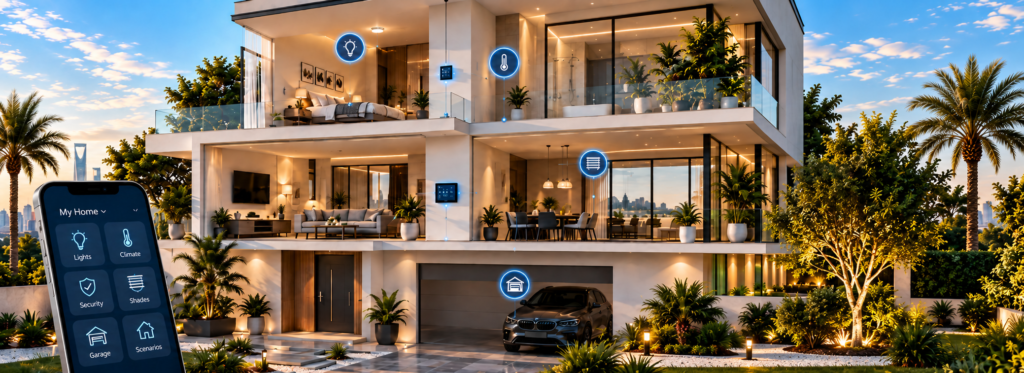
Smart Lighting Control: How a Smart Home System Can Improve Your Home's Lighting
In the age of modern technology, smart lighting control has become one of the most prominent features of smart home systems, transforming everyday living into a more comfortable and efficient experience. A smart lighting control system lets you control your home's lighting in many innovative ways, enhancing comfort while saving energy at the same time.
A smart lighting control system combines lighting with modern technology through sensors, smart switches and mobile apps. With this technology, you can adjust brightness and change colors from an app on your smartphone, or even with voice commands through digital assistants such as Amazon Alexa or Google Assistant. Lighting can also be programmed to work automatically according to the time of day or specific activities, such as brightening in the morning to start your day energized, or gradually dimming in the evening to create a relaxing atmosphere before sleep.
One of the benefits of smart lighting control is energy saving, as lighting can be set to work only when you need it, reducing energy consumption and lowering bills. A smart lighting system can also work with motion sensors to turn lights on only when people enter a room and off when no one is there, improving energy efficiency.
In addition, smart lighting control provides a high level of security. Lighting can be programmed to make it look as if you are at home when you are away, which helps deter potential intruders. The status of the lighting can also be tracked and monitored from anywhere via the internet, adding an extra layer of security to your home.
In short, smart lighting control is an essential part of a smart home system, giving you comfortable lighting that is efficient in terms of energy and security. By integrating this technology with your home's smart system, you can achieve a higher level of comfort and control over your home environment, making your daily life simpler and more comfortable.
Articles you may like

How to Choose the Right Smart Home System for Your Project: KNX, Zigbee or Hybrid Solutions?
Smart home systems have become an essential part of modern residential projects, but the real challenge is not adding smart switches or controlling lighting and AC from a phone; it is choosing...
Read article
What Is the Difference Between a Wired and a Wireless Smart Home, and Which Is Better for New Projects?
When planning a smart home, choosing between a wired and a wireless system is one of the most important decisions, affecting the project infrastructure and how it will run in the future. Wired systems rely on dedicated cabling...
Read article
How to Design the Network Infrastructure for a Multi-Unit Residential Project
In modern residential projects, the network has become core infrastructure as important as electricity, especially as apartments and residential compounds depend on the internet, Wi-Fi, CCTV cameras, intercoms, smart homes and other systems...
Read article