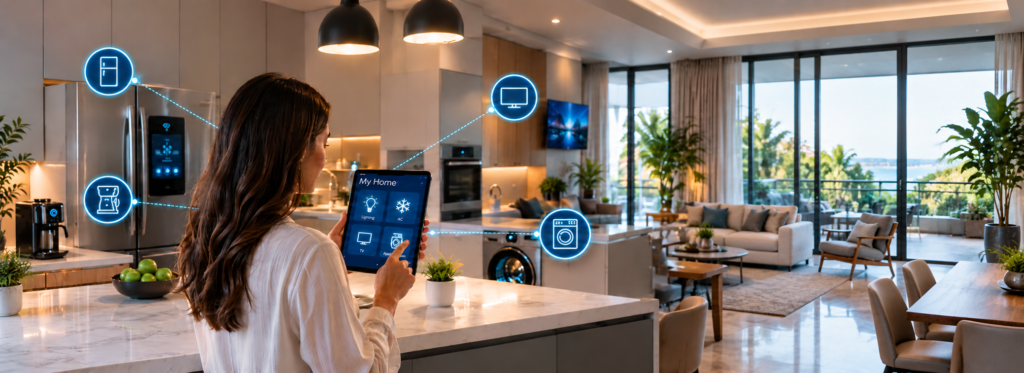
Smart home systems have become an essential part of modern residential projects. Yet the real challenge is not adding smart switches or controlling lighting and air conditioning from a phone; it is choosing the system that suits the nature of the project from the start. Every project has different needs in terms of home size, construction stage, required level of automation, budget and future expansion. Among the most widespread options today are wired KNX systems, wireless Zigbee solutions, and hybrid systems that combine more than one technology.
KNX is a suitable choice for new projects whose systems are planned from the design and foundation stage, especially villas and residential projects that require a high level of integration and reliability. It connects lighting, air conditioning, curtains, sensors and more within an integrated, scalable system. Zigbee, on the other hand, stands out for its flexibility and ease of implementation thanks to wireless communication between devices, making it a practical choice for existing homes or projects looking for smart solutions at a more flexible cost and without complex infrastructure.
Hybrid solutions combine the advantages of wired and wireless systems within the same project. A wired system can be relied upon for the main functions, while wireless solutions are used for additional devices or future expansions. This approach gives the project greater flexibility, especially when the integration is designed correctly so that the user experiences lighting, air conditioning, curtains, locks, sensors and more as one experience, regardless of the technology behind each device.
So, KNX, Zigbee or Hybrid? There is no single answer that fits every project. If the project is new and needs a robust infrastructure and broad integration, KNX may be the most suitable choice. If flexibility, ease of installation and expansion are the priority, Zigbee may be more appropriate. And when the project needs to combine reliability with flexibility, a hybrid solution may be the best option. At Smart Gulf Fields for Information Technology, we start by studying the project and its needs before choosing the technology, because the best system is not the most complex or the most expensive, but the one designed correctly to suit the project and its users today and in the future.